
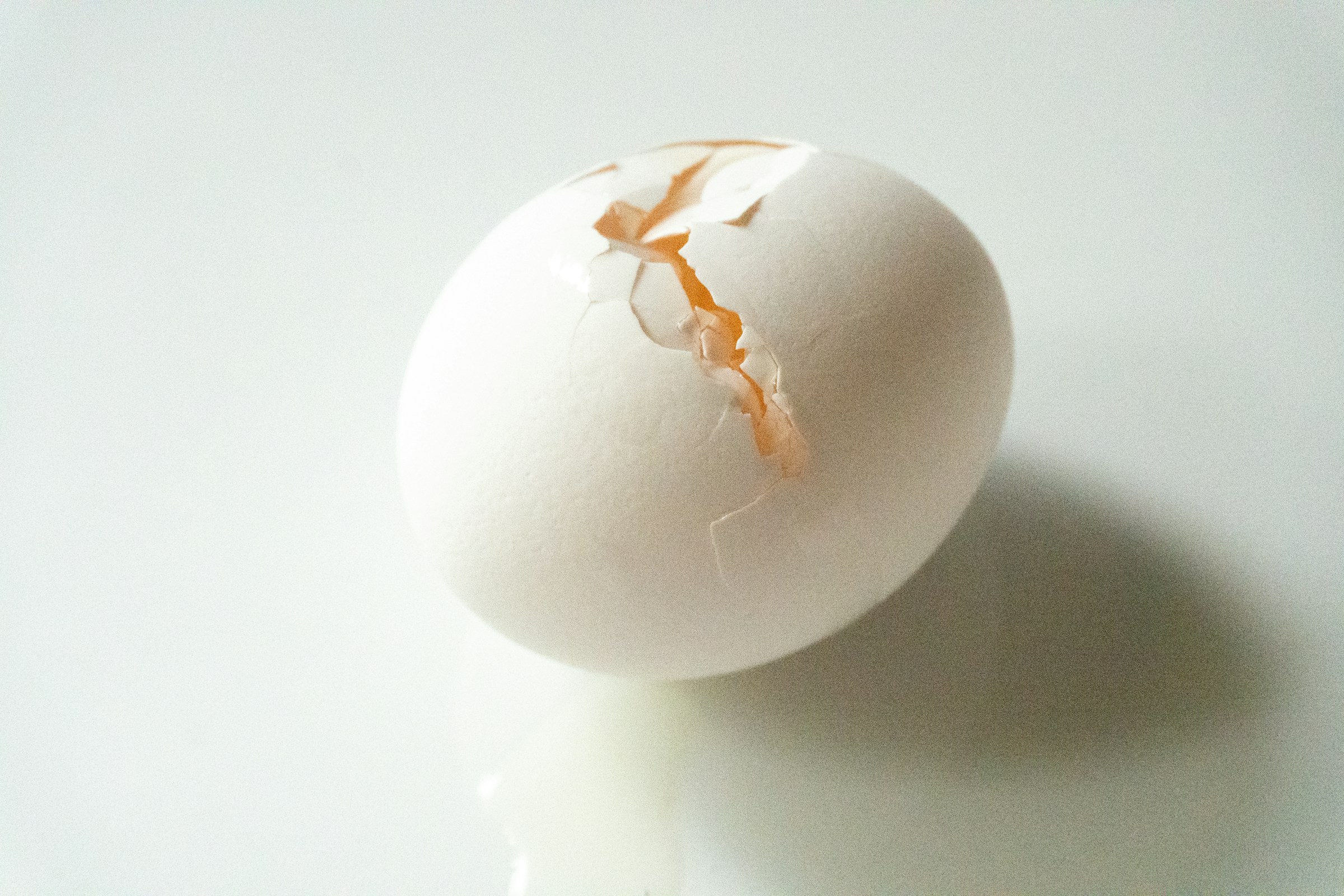

We used to live in a time when quality was almost synonymous with smoothness: straight lines, flawless copy, clean retouching, perfect images. A mistake was always something we had to fix. Carelessness was seen as a lack of competence.
And then a feeling appeared that everything had become too correct.
AI radically lowered the cost of producing “acceptable” text, visuals, and video. In 2026, the world is drowning in perfect content. Midjourney and Sora generate impeccable images and videos in seconds. Grok and Claude write text without a single grammatical error. Social networks are filled with glossy posts. But something has changed: audiences have started to get tired. Scrolling through the feed doesn’t bring delight - it brings boredom. The term "AI fatigue" emerged - exhaustion from artificial intelligence - and became one of the key trends of 2025–2026.
The thesis is simple: when technical perfection is available to everyone, real value - paradoxically - becomes human imperfection. Even a tiny human flaw (a typo, an uneven sentence rhythm, a slightly off photo, an awkward pause in speech, imperfect layout, unpolished editing, a messy cut) starts to feel valuable as a rare signal: behind this content is a living person with emotions, experience, and effort.
This article is about why imperfection has suddenly become a new aesthetic currency - and why “carelessness” isn’t the absence of taste, but a way to bring meaning back.
The psychology of the value of Imperfection
AI has flipped the economics of form: now you can get "perfect" quickly, almost for free, and infinitely. And as soon as perfection stopped being rare, it stopped being a sign of value. AI creates content optimized for patterns: ideal facial proportions, flawless composition, logically calibrated text. But that very perfection can trigger rejection.
First: sameness. Millions of similar images and texts blur uniqueness.
Second: the lack of a soul. AI doesn't carry personal experience, accidental associations, or emotion.
Third: a loss of trust. In the era of deepfakes, perfection raises suspicion: "Is this definitely not AI?"
In 2026, the most valuable characteristic of digital content is no longer reach, not production power, not even production quality. It's visible human limitation. Against an endless stream of perfectly formatted AI content, these signals become markers of authenticity and generate trust. Instagram head Adam Mosseri explicitly advised avoiding overly polished content: "In a world where AI generates flawless, the human is valued."
Humans are evolutionarily tuned to recognize and value signals of humanness. This creates relatability: perfect heroes repel, while imperfect ones evoke empathy. Research supports this: people prefer human content even when AI is objectively better. Imperfection leaves mental space for creativity - something AI perfectionism often eliminates.
For professionals in technology, AI marketing, and design, this isn't just an aesthetic trend. It's a structural shift in how attention and trust are distributed - and how brands are forced to differentiate in an economy of "infinite content."
You can see examples of this new value of "roughness" almost everywhere: raw video in Reels and TikTok often outperforms polished production. Influencers who use self-irony, natural speech, and even small typos hold attention better than flawless AI accounts. Brands increasingly highlight the “human touch” instead of going all-in on AI in advertising. And in writing and podcasting, personal essays and “imperfect professionalism” -voice, rhythm, accent, a rough honesty — more and more often beat error-free but impersonal smoothness.
The new stack: AI for scale, humans for scarcity
In product design, patterns of "intentional imperfection" are gradually crystallizing - especially in products where a powerful AI layer runs under the hood. For practitioners in tech, marketing, and design, this means a strategic shift: the question isn't whether to use AI, but at what level.
A rational configuration looks like this:
- AI handles scale: research, summaries, drafts, generating variations, localization support.
- Humans own the scarce layer: topic choice, emphasis and framing, lived experience, risk, emotional tone.
- During editing, the team deliberately keeps some rough edges and individual traits instead of “polishing” everything into a corporate AI voice.
For creators and leaders, this means you don't need a perfect media persona. You need a resilient, recognizable, sometimes contradictory human presence: a face, voice, story, and regular moments of stepping outside your comfort zone.
The traditional "human in the loop" formula implies that humans are the supervisors of machines. In the new configuration, it's the opposite: machines serve scale, while humans own meaning and value for other humans.
AI becomes a powerful but anonymous infrastructure layer. The human becomes the visible but limited layer of meaning and trust. And it's exactly in this layer that you need mistakes, doubts, heterogeneity, unpredictability - they make the human side of the system recognizable and interesting.
For teams, this means investing not only in the best model, but also in the environment where a living, imperfect voice can actually be heard: editing, a culture that tolerates risk, and permission for “raw” content to ship.
Imperfection as a space for creativity
Against the exponential growth of generative capabilities, it's easy to slide into a binary "AI versus humans." But the real game isn't there.
The machine has already won the race for scale and speed. Humans still win the race for trust, empathy, and the willingness to follow an author - largely because of imperfection. The main scarcity is human time and context.
If you look at this through the eyes of a designer or product lead, an error stops being just a bug. It becomes a design space. It's around human flaws, limitations, and quirks that you can build new formats, products, and brands — the kind that will stand out in 2026 against the endless AI noise.
In the future, “human-made” labels may appear, like “organic” in food. The risk: AI will begin to imitate mistakes, and the value will shift again.
But for now, human roughness is the new luxury in a world of machine perfection. Keep your signature. It's worth more than any AI-perfect output.
The idea that things have to be perfect is not really what people want anymore. Imperfection is actually what makes something unique. When something is made by a human it is not perfect. That is what makes it interesting. Machines and computers can make things that're perfect but they do not have the same character as something that is made by a human.
People are starting to think that imperfection is a thing it is like a luxury. This is because imperfection is what makes something authentic. When something is perfect it can seem fake. Like it was made by a machine.. When something is imperfect you can tell that a human made it and that is what makes it special.
Imperfection is what makes art, music and literature interesting. If everything was perfect it would be boring. The imperfections are what make these things unique and worth looking at or listening to. So imperfection is not a thing it is actually what makes something valuable and special.
The thing, about mistakes is that they are what make us human. If we did not make mistakes we would not be able to learn and grow. Human mistakes are what make life interesting. They are what make us who we are. Imperfection and human mistakes are what make life worth living. That is why they beat AI perfection.


